理论| 马克·贾佐贝克论后本体论时代的数字斯德哥尔摩综合症_弗拉瑟
Seeing Ourselves, Loving Our Captors: Mark Jarzombek’s Digital Stockholm Syndrome in the Post-Ontological Age
看着我们自己,爱着我们的俘获者:马克· 贾佐贝克论后本体论时代的数字斯德哥尔摩综合症
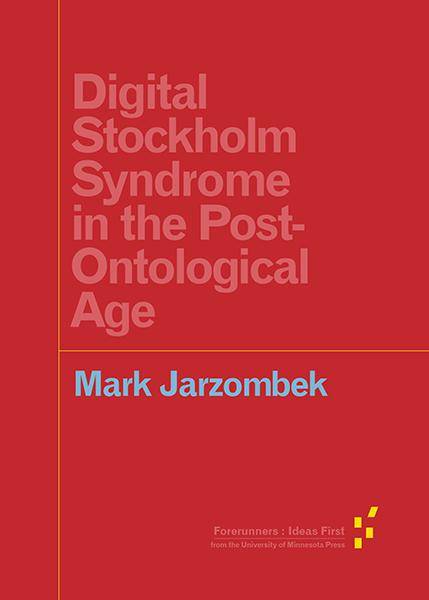
▲《后本体论时代的数字斯德哥尔摩综合症》(2016 年)
作者: 迈克尔·米勒(Michael Miller)
译者: 何璇
编辑: 林津
几乎所有的存在都是Beta。它们不断相互依存着进化,直至死亡,死亡也不是终点。一切都不会结束。没有尽头,没有闭环。搜索会超越我们的生命且永生。
—— 约书亚· 科恩(Joshua Cohen ),
《数字之书》
成为人类就是成为Beta 测试员。
—— 马克· 贾佐贝克(Mark Jarzombek ),
《后本体论时代的数字斯德哥尔摩综合症》
太多人可以访问你的心境。
—— 雷纳塔· 阿德勒(Renata Adler ),
《快艇》
当我读完菲勒姆· 弗拉瑟(Vilém Flusser )的大量作品后发现,他的思想核心概念之一是“ 人与人之间的交流是不自然的” (2002 ,5 )。我有一种几乎不可动摇的直觉,这位已故的捷克- 巴西思想家必是从反复讽刺中获得了某种超然的愉悦感。弗拉瑟宣称颇为冷酷观点“ 没有可以与他人交流具体经验的交流形式” (2016 年,第23 页),交流意味着本体之间不可避免地产生社会经验的嫌隙,在他看来,交流本身就是一个不自然的构成。 弗拉瑟一生都在努力思考欧洲虚无主义的哲学含义,这种智力参与的证据可以在他的传播理论中找到,从中也可以发现他研究的全部轨迹。
弗拉瑟吸引我的主要思想之一是人类交流使我们能够“ 忘记我们完全孤独和不交流的无意义的环境,也就是我们被注定单独监禁和死亡的世界:自然的世界” (2002 年,第4 期)。为了帮助躲避自然这无声且无情的浪潮,弗拉瑟建议人类通过存储记忆这种外在的思想进行交流,这些思想的传播最终将两个或两个以上的人绑定到一个意义系统中。只有在人与人之间建立诸如写作或说话之类的主体间交流系统时,我们长期致力于沟通的目的才变得清晰:我们进行交流是为了“ 在他人中永生” (2016 ,31 )。弗拉瑟戏谑地提出无法沟通所具有的悖论,即沟通对人类而言是不自然的,但“ 尽管有其固有的局限性,它也是如此的丰富” (26 ),最具讽刺意味的是,我们所能完全理解的是我们无法完全理解。
弗拉瑟的传播理论可以看作他对二十世纪不断变化的技术环境的回应,关于传播和技术的思考使他得出以下结论:“ 生产设备的初衷是为了服务于人类,但某种程度上,人类与设备的关系被颠倒了,人类根据设备运转。一名男子向设备发出了设备已指示他发出的指令” (2011,73 )。[1] 弗拉瑟对所谓的人类对技术的掌控力持怀疑态度,这肯定不是苹果或谷歌希望你知道的观点(虽然不是什么秘密)。只要粗略浏览Wired 或Insider Higher Ed 上的技术博客,选两个长期挂着的案例,就会找到与弗拉瑟截然不同的观点。实际上“ 旨在成为媒介的对象可能会阻碍交流” (2016 ,45 )。 如果设备实际上阻碍了交流,为什么我们常常认为它是促进交流的呢?换个说法,如果每件事物都被说成某种对象,包括设备,是否有一种对象可以与其他所有对象进行交流?对象发声时发生了什么?我们是否留意到了这些声音?
约书亚· 科恩(Joshua Cohen )2015 年的小说《数字之书》开场白中以直接且反潮流的方式对读者说“ 如果您正在屏幕上阅读此书,请滚” 。只有在双手捧书的情况下我才会说话(5 )。本书讲述了一个名叫约书亚· 科恩(Joshua Cohen )的作家的故事(故事背景对应于历史传记作家约书亚· 科恩(Joshua Cohen )),他被委托代写另一位约书亚· 科恩(Joshua Cohen )的回忆录(一家大型Google 类公司的首席执行官),小说的中间部分提供了两个科恩“ 未经编辑” 的对话笔录,其中首席执行官讲述了他从1970 年代末到2013 年在湾区及周边地区的成长和巨大的商业成功。两个科恩生活结构的耦合,使得一个约书亚· 科恩(或所有约书亚· 科恩)无法从数字媒体的历史中被分辨出来。“ 我可以接受新事物,但是资本不应该对我进行拍照或录音提取” ,科恩叙事者感叹道。换句话说,当叙述者科恩在算法治理和监视广泛背景下代笔写另一个科恩的回忆录时,他的自我也不过是等待将来被挖掘的网络信息存储库。
开场白相对温和的警告却使读者对文本产生了敌意,这个对象在说话![2] 精通技术的二十一世纪的读者并不是唯一厌倦书籍的对象,书也受够了我们。在一个对象言语活跃但却无限隐退的时代,人类的认知进程在复杂的计算系统中被认为是有效的;保留“ 主观经验” 类别的唯一理由是它使我们能够“ 掌握网络技术分类并将其分散代理的能力” 。乍一看,小说应该是对阅读进行思考类的题材 [3] ,这也正是科恩所探讨的主题。如果他或她选择在屏幕上阅读文本的话要礼貌地“ 滚蛋” ,尽管文本并未完全忽视仍然偏爱“ 纸浆,纸板或是布质纸张” 的读者(5 )。标题介词表明书最怕的事(Book as Numbers),书作为对象预警道:这本书或其读者都不应被简化为可计算的数字。
将文学语言转化为数字位,消除了读物作为对象的现象学必要性,它也暗示了文学,哪怕只是一般的日常语言,人类,尤其是作为本体论对象时,也被约等于数字被解读,随后等待算法的提取。当科恩的小说抹去了作者,叙述者,角色和媒介之间的区别时,叙述者注意到“ 我人生的唯一记录就是这个有关于他人的记录” (9 )。这种情况下,一个人(或另一个人)的人生记录只是为了展示计算技术是如何抹除对象现象学的历史。人固然重要,但他们并不拥有占据与世界上其他对象不同地位的特权” (Huehls 20 )?为什么似乎 “ 回归本体论” 在理论/ 哲学层面看来对我们的身份比较有贡献?
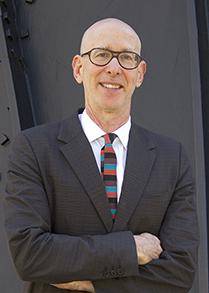
▲ 马克·贾佐贝克(Mark Jarzombek)
马克· 贾佐贝克(Mark Jarzombek )的《后本体论时代的数字斯德哥尔摩综合症》(2016 年)抛出了一个简洁,讽刺且深刻的问题:非人文主义理论如何在数字技术和大数据的背景下进行下去。尽管这两种看似无关的事物存在差异,但它们都对“ 人类中心主义” 概念有着批判或削弱态度,其概念皆从理论/ 哲学的“ 本体论转向” 假设中进行了借鉴(Rosenberg n.p. )。尽管贾佐贝克的书中并未明确说明这些观点的相似之处,但数字斯德哥尔摩综合症提示我们思考如何从本体论中减少“ 人” 的观念,这既激发了技术决定论中的反人本主义,又激发了后人本主义或非人本主义理论。我们在最近的本体论哲学中发现了它们的共同点,换句话说,数字斯德哥尔摩综合症所涉及的问题是:什么样的本体论/ 存在论以及较小范围的主观论,会同时吸引当代哲学家和硅谷的技术专家?贾佐贝克在早期就提出了这样的问题:“ 什么是新本体?产生它的历史背景是什么?我们如何在现实中适应新自我?” (X )。
贾佐贝克的“ 新自我” 理论在“ 去中心化” 与“ 人类中心论” 之间进行周旋[4] 。斯德哥尔摩数字综合症明确存在于算法的历史环境中,它挑衅了哲学概念的现实地位及可读性。通过进行这样的比较,贾佐贝克引导我们对人本主义传统哲学思想,和结合二十一世纪数字媒体的哲学之间的相似处进行理解[5] 。
亚历山大· 加洛韦(Alexander Galloway )提出的一种概念合并,在本体论系统结构和后福特资本主义结构中寻找耦合(347 ),同样,当今世界“ 从微观/ 分子层面进行设计,将算法与本体融合在一起”[6] 。现在,我们将“ 存在” 理解为计算技术收集并反馈给我们的信息/ 算法副产品。我们的个人历史,或只是我们数据使用(及以后对我们的使用)的记录,包括贾佐贝克所说的“ 本体释放... 或数据专家所说的我们的数据释放...” ,这些都是经过仔细检查,打包,格式化,处理,出售和转售,以娱乐、社交媒体、应用程序、健康保险、点击诱饵、数据合同等形式进行整合再返回给我们的” (x )。
第二人称代词的空白处与本体的信用评分、病历、4G 数据使用情况、Facebook 赞及其推文的地位相同,甚至可能由其定义。贾佐贝克写道:“ 这些设备的目的是产生、放大和暴露我们的本体释放” (25 )。 每次登录Facebook 时,我们都会免费提供本体释放,作为回报,我们能够获取一种“ 自我” 感[7] 。如果“ 无法从人性公式中追踪到我们是谁,“ 我是不可追踪的” (31 ),那么为什么技术决定论者和当代本体论者还要进行操作?是什么导致他们对形式化的本体有了集体认同?为什么必须像地图或分类账本一样对自我进行跟踪和解释?
贾佐贝克称之为“ 全球化存在” (2 )的“ 新自我” 在世界各地旅行,他在巴黎检查其银行对帐单,或在阿姆斯特丹的一个咖啡馆里标记一个柏林朋友的Facebook 照片,它会在任何地方进行本体释放。尽管GPS 和商业卫星为本体释放提供保障“ 使我们成为全球化的” ,但它也无意间将“ 存在” 重新定义为“ 定位/ 证据” (1 )。对于贾佐贝克而言,今天的本体论问题不只是问“ 存在是什么?” 。而是在问“ 它在哪里以及如何找到它?” 代替人类试图定位和理解“ 存在” 的是,“ 存在” 找到我们,但前提是我们允许自己被定位。
贾佐贝克指出,当今的本体论对提出关于存在的问题并不十分感兴趣,它太“ 以人类为中心”[8] 。20 世纪的本体论试图通过收集数据,持续跟踪,再跟踪数据变化来定位存在。盘点清单,列出清单,阅读清单,整理数字并搜索数据库。“ 我可以在Google 上搜索到它吗?” 才是二十一世纪本体论思想中最重要的问题。
本体论思想(今天意味着本体核算或寻找方法来解释本体核算)在当今的哲学上等同于数据管理实践,一个人的数据与一个人的自我之间没有区别,顽固地将你与你的数据分开的任何本体论都不再适用。斯德哥尔摩数字综合症通过以下表达概括了这一转变:“ 从本体论到轨迹学” (71 )。[9] 允许关于自我的数据成为等同于本体的本体论哲学转变来自于贾佐贝克所谓的“ 活动本体论” 。
在这种“ 活动本体论” 中,主体位置和对象位置是无法区分的…… 整个人类系统都是通过封闭的经验主义网格进行微处理的” (31 、29 )。贾佐贝克小心翼翼地将他的“ 活动本体论” 与最近重新兴起的浪漫主义区分开来,浪漫主义仅将其对象表述为充满活力的主体。他指出“ 讽刺的是,尽管主体在自我确认(现代人自我心理化过程中挥之不去的副产物)的客观性(如社会科学)保持相对稳定(28 )” [10] 。通过设计机警的的扁平化本体论新方法(所有方法都是通过面无表情的语言指令来完成的),“ 人类及其(非/ 重)体现的计算符号处于平等地位” (32 )。我没有定义我的数据,但是我的数据定义了我。
当今的本体论系统(即哲学和计算系统)中存在的内容均可被跟踪并存储为数据。贾佐贝克用另一个精妙的表述总结了我们的情况:“ 算法建模+ 全球定位+ 人的规模+ 计算速度= 数据地缘政治” (12 )。 尽管跟踪技术的普遍性定义了贾佐贝克的“ 全球存在化” 中的“ 全球” ,但它也为我们提供了另一种方式来理解人文主义对GIS 和其他数字地图平台的热情,“ 技术精神环境使人养成了自我的感觉” (5 )。
是不是有关人文学科的文化和政治不断被削弱提醒人文主义者,重新考虑其广泛学科追求中的基本术语,使得人文学者最为激进地领导着推翻了几十年的人本主义思想?难道数字化斯德哥尔摩综合症,这种枯竭的观念已成为重塑人类学的基本前提?追求被“ 人类” 清除的“ 人文” 到底意味着什么?难道缺乏想象的人文主义已经成为新的(子)学科了?” [11]
在标题为“ 走向偏执” 的后期章节中,贾佐贝克最终得出了“ 数字斯德哥尔摩综合症” 的有效定义:数据可视化。对于贾佐贝克而言,数据可视化“ 是由数字世界的建筑师设计的” ,以减轻(59 )已存扭曲或“ 走向扭曲” 造成的安全隐患。安全隐患之所以具有威胁性,是因为它提醒我们“ 安全的目的是为了掩盖不安全的事实” (59 )。当系统出现问题时,我们需要被告知系统并没有真正发生故障——“ 这意味着系统正在运行” (61 )[12] 。社会的,他人的,非我的,都是相同安全隐患的变体,是定义“ 不确定性” 的另一种方式(66 )。因此,如果一切都按照预期的方式运转,我们很少考虑不确定性的全部含义(无论是技术性还是哲学性的),因为这样做可能会使我们变得偏执,甚至更糟:我们将不得不承认自己在人类这个对象中。
但是,数据可视化提供了一种舒缓的药膏,我们可以(自助)应用该药膏,以减轻“ 扭曲” 的痛苦。可视化数据并创建数据图表为我们提供了有用且令人愉悦的工具,使我们可以将自己置于“ 后本体论” 时代[13] 。“ 我们尝试并开发了数据可视化及收集工具,使我们标示出都市现象。我们的方法借鉴了科学和设计的传统,通过空间分析展示模式并将这些结果通过设计传达给新的受众” 一个数据可视化项目(http://civicdatadesignlab.org/ )告诉我们,每次我们环球旅行并自我地图绘制时,我们都会肯定自己的存在,因此,我们默默地将地理数据提供给那些希望通过它进行筛选并将其转化为艺术品或利润的人。
虽然我可能有点偏执,但读完《后本体论时代的数字斯德哥尔摩综合症》后,我终于放松了,因为我现在知道自己的数据将得到很好的利用[14] 。像我一样,也许你会因为知道自己的存在只不过是别人的数据可视化中的几个像素而感到安慰。
注释
[1] I am reminded of a similar argument advanced by Tung-Hui Hu in his A Prehistory of the Cloud (2016). Encapsulating Flusser’s spirit of healthy skepticism toward technical apparatuses, the situation that both Flusser and Hu fear is one in which “the technology has produced the means of its own interpretation” (xixx).
[2] It is not my aim to wade explicitly into discussions regarding “object-oriented ontology” or other related philosophical developments. For the purposes of this essay, however, Andrew Cole’s critique of OOO as a “new occasionalism” will be useful. “’New occasionalism,’” Cole writes, “is the idea that when we speak of things, we put them into contact with one another and ourselves” (112). In other words, the speaking of objects makes them objectively real, though this is only possible when everything is considered to be an object. The question, though, is not about what is or is not an object, but is rather what it means to be. For related arguments regarding the relation between OOO/speculative realism/new materialism and mysticism, see Sheldon (2016), Altieri (2016), Wolfendale (2014), O’Gorman (2013), and to a lesser extent Colebrook (2013).
[3] For the full set of references here, see Bennett (2010), Hayles (2014 and 2016), and Hansen (2015).
[4] While I cede that no thinker of “post-humanism” worth her philosophical salt would admit the possibility or even desirability of purging the sins of “correlationism” from critical thought all together, I cannot help but view such occasional posturing with a skeptical eye. For example, I find convincing Barbara Herrnstein-Smith’s recent essay “Scientizing the Humanities: Shifts, Negotiations, Collisions,” in which she compares the drive in contemporary critical theory to displace “the human” from humanistic inquiry to the impossible and equally incomprehensible task of overcoming the “‘astro’-centrism of astronomy or the biocentrism of biology” (359).
[5] In “Modest Proposal for the Inhuman,” Julian Murphet identifies four interrelated strands of post- or inhumanist thought that combine a kind of metaphysical speculation with a full-blown demolition of traditional ontology’s conceptual foundations. They are: “(1) cosmic nihilism, (2) molecular bio-plasticity, (3) technical accelerationism, and (4) animality. These sometimes overlapping trends are severally engaged in the mortification of humankind’s stubborn pretensions to mastery over the domain of the intelligible and the knowable in an era of sentient machines, routine genetic modification, looming ecological disaster, and irrefutable evidence that we share 99 percent of our biological information with chimpanzees” (653).
[6] The full quotation from Galloway’s essay reads: “Why, within the current renaissance of research in continental philosophy, is there a coincidence between the structure of ontological systems and the structure of the most highly evolved technologies of post-Fordist capitalism? [….] Why, in short, is there a coincidence between today’s ontologies and the software of big business?” (347). Digital Stockholm Syndrome begins by accepting Galloway’s provocations as deive instead of speculative. We do not necessarily wonder in 2017 if “there is a coincidence between today’s ontologies and the software of big business”; we now wonder instead how such a confluence came to be.
[7] Wendy Hui Kyun Chun makes a similar point in her 2016 monograph Updating to Remain the Same: Habitual New Media. She writes, “If users now ‘curate’ their lives, it is because their bodies have become archives” (x-xi). While there is not ample space here to discuss the full theoretical implications of her book, Chun’s discussion of the inherently gendered dimension to confession, self-curation as self-exposition, and online privacy as something that only the unexposed deserve (hence the need for preemptive confession and self-exposition on the internet) in digital/social media networks is tremendously relevant to Jarzombek’s Digital Stockholm Syndrome, as both texts consider the Self as a set of mutable and “marketable/governable/hackable categories” (Jarzombek 26) that are collected without our knowledge and subsequently fed back to the data/media user in the form of its own packaged and unique identity. For recent similar variations of this argument, see Simanowski (2017) and McNeill (2012).
I also think Chun’s book offers a helpful tool for thinking through recent confessional memoirs or instances of “auto-theory” (fictionalized or not) like Maggie Nelson’s The Argonauts (2015), Sheila Heti’s How Should a Person Be (2010), Marie Calloway’s what purpose did i serve in your life (2013), and perhaps to a lesser degree Tao Lin’s Richard Yates (2010), Taipei (2013), Natasha Stagg’s Surveys, and Ben Lerner’s Leaving the Atocha Station (2011) and 10:04 (2014). The extent to which these texts’ varied formal-aesthetic techniques can be said to be motivated by political aims is very much up for debate, but nonetheless, I think it is fair to say that many of them revel in the reveal. That is to say, via confession or self-exposition, many of these novels enact the allegedly performative subversion of political power by documenting their protagonists’ and/or narrators’ certain social/political acts of transgression. Chun notes, however, that this strategy of self-revealing performs “resistance as a form of showing off and scandalizing, which thrives off moral outrage. This resistance also mimics power by out-spying, monitoring, watching, and bringing to light, that is, doxing” (151). The term “autotheory,” which was has been applied to Nelson’s The Argonauts in particular, takes on a very different meaning in this context. “Autotheory” can be considered as a theory of the self, or a self-theorization, or perhaps even the idea that personal experience is itself a kind of theory might apply here, too. I wonder, though, how its meaning would change if the prefix “auto” was understood within a media-theoretical framework not as “self” but as “automation.” “Autotheory” becomes, then, an automatization of theory or theoretical thinking, but also a theoretical automatization; or more to the point: what if “autotheory” describes instead a theorization of the Self or experience wherein “the self” is only legible as the product of automated computational-algorithmic processes?
[8] Echoing the critiques of “correlationism” or “anthropocentrism” or what have you, Jarzombek declares that “The age of anthrocentrism is over” (32).
[9] Whatever notion of (self)identity the Self might find to be most palatable today, Jarzombek argues, is inevitably mediated via global satellites. “The intermediaries are the satellites hovering above the planet. They are what make us global–what make me global” (1), and as such, they represent the “civilianization” of military technologies (4). What I am trying to suggest is that the concepts and categories of self-identity we work with today are derived from the informatic feedback we receive from long-standing military technologies.
[10] Here Jarzombek seems to be suggesting that the “object” in the “objectivity” of “the social sciences” has been carelessly conflated with the “object” in “object-oriented” philosophy. The prioritization of all things “objective” in both philosophy and science has inadvertently produced this semantic and conceptual slippage. Data objects about the Self exist, and thus by existing, they determine what is objective about the Self. In this new formulation, what is objective about the Self or subject, in other words, is what can be verified as information about the self. In Indexing It All: The Subject in the Age of Documentation, Information, and Data (2014), Ronald Day argues that these global tracking technologies supplant traditional ontology’s “ideas or concepts of our human manner of being” and have in the process “subsume[d] and subvert[ed] the former roles of personal judgment and critique in personal and social beings and politics” (1). While such technologies might be said to obliterate “traditional” notions of subjectivity, judgment, and critique, Day demonstrates how this simultaneous feeding-forward and feeding back of data-about-the-Self represents the return of autoaffection, though in his formulation self-presence is defined as information or data-about-the-self whose authenticity is produced when it is fact-checked against a biographical database (3)—self-presence is a presencing of data-about-the-Self. This is all to say that the Self’s informational “aboutness”–its representation in and as data–comes to stand in for the Self’s identity, which can only be comprehended as “authentic” in its limited metaphysical capacity as a general informatic or documented “aboutness.”
[11] Flusser is again instructive on this point, albeit in his own idiosyncratic way¬¬. Drawing attention to the strange unnatural plurality in the term “humanities,” he writes, “The American term humanities appropriately describes the essence of these disciplines. It underscores that the human being is an unnatural animal” (2002, 3). The plurality of “humanities,” as opposed to the singular “humanity,” constitutes for Flusser a disciplinary admission that not only the category of “the human” is unnatural, but that the study of such an unnatural thing is itself unnatural, as well. I think it is also worth pointing out that in the context of Flusser’s observation, we might begin to situate the rise of “the supplemental humanities” as an attempt to redefine the value of a humanities education. The spatial humanities, the energy humanities, medical humanities, the digital humanities, etc.—it is not difficult to see how these disciplinary off-shoots consider themselves as supplements to whatever it is they think “the humanities” are up to; regardless, their institutional injection into traditional humanistic discourse will undoubtedly improve both(sub)disciplines, with the tacit acknowledgment being that the latter has just a little more to gain from the former in terms of skills, technical know-how, and data management. Many thanks to Aaron Jaffe for bringing this point to my attention.
[12] In his essay “Algorithmic Catastrophe—The Revenge of Contingency,” Yuk Hui notes that “the anticipation of catastrophe becomes a design principle” (125). Drawing from the work of Bernard Stiegler, Hui shows how the pharmacological dimension of “technics, which aims to overcome contingency, also generates accidents” (127). And so “as the anticipation of catastrophe becomes a design principle…it no longer plays the role it did with the laws of nature” (132). Simply put, by placing algorithmic catastrophe on par with a failure of reason qua the operations of mathematics, Hui demonstrates how “algorithms are open to contingency” only insofar as “contingency is equivalent to a causality, which can be logically and technically deduced” (136). To take Jarzombek’s example of the failing computer or what have you, while the blue screen of death might be understood to represent the faithful execution of its programmed commands, we should also keep in mind that the obverse of Jarzombek’s scenario would force us to come to grips with how the philosophical implications of the “shit happens” logic that underpins contingency-as-(absent) causality “accompanies and normalizes speculative aesthetics” (139).
[13] I am reminded here of one of the six theses from the manifesto “What would a floating sheep map?,” jointly written by the Floating Sheep Collective, which is a cohort of geography professors. The fifth thesis reads: “Map or be mapped. But not everything can (or should) be mapped.” The Floating Sheep Collective raises in this section crucially important questions regarding ownership of data with regard to marginalized communities. Because it is not always clear when to map and when not to map, they decide that “with mapping squarely at the center of power struggles, perhaps it’s better that not everything be mapped.” If mapping technologies operate as ontological radars–the Self’s data points help point the Self towards its own ontological location in and as data—then it is fair to say that such operations are only philosophically coherent when they are understood to be framed within the parameters outlined by recent iterations of ontological thinking and its concomitant theoretical deflation of the rich conceptual make-up that constitutes the “the human.” You can map the human’s data points, but only insofar as you buy into the idea that points of data map the human. See http://manifesto.floatingsheep.org/.
[14] “Mind/paranoia: they are the same word!”(Jarzombek 71).
参考文献:
• Adler, Renata. Speedboat. New York Review of Books Press, 1976.
• Altieri, Charles. “Are We Being Materialist Yet?” symplokē 24.1-2 (2016):241-57.
• Calloway, Marie. what purpose did i serve in your life. Tyrant Books, 2013.
• Chun, Wendy Hui Kyun. Updating to Remain the Same: Habitual New Media. The MIT Press, 2016.
• Cohen, Joshua. Book of Numbers. Random House, 2015.
• Cole, Andrew. “The Call of Things: A Critique of Object-Oriented Ontologies.” minnesota review 80 (2013): 106-118.
• Colebrook, Claire. “Hypo-Hyper-Hapto-Neuro-Mysticism.” Parrhesia 18 (2013).
• Day, Ronald. Indexing It All: The Subject in the Age of Documentation, Information, and Data. The MIT Press, 2014.
• Floating Sheep Collective. “What would a floating sheep map?” http://manifesto.floatingsheep.org/.
• Flusser, Vilém. Into the Universe of Technical Images. Translated by Nancy Ann Roth. University of Minnesota Press, 2011.
• –––. The Surprising Phenomenon of Human Communication. 1975. Metaflux, 2016.
• –––. Writings, edited by Andreas Ströhl. Translated by Erik Eisel. University of Minnesota Press, 2002.
• Galloway, Alexander R. “The Poverty of Philosophy: Realism and Post-Fordism.” Critical Inquiry 39.2 (2013): 347-366.
• Hansen, Mark B.N. Feed Forward: On the Future of Twenty-First Century Media. Duke University Press, 2015.
• Hayles, N. Katherine. “Cognition Everywhere: The Rise of the Cognitive Nonconscious and the Costs of Consciousness.” New Literary History 45.2 (2014):199-220.
• –––. “The Cognitive Nonconscious: Enlarging the Mind of the Humanities.” Critical Inquiry 42 (Summer 2016): 783-808.
• Herrnstein-Smith, Barbara. “Scientizing the Humanities: Shifts, Collisions, Negotiations.” Common Knowledge 22.3 (2016):353-72.
• Heti, Sheila. How Should a Person Be? Picador, 2010.
• Hu, Tung-Hui. A Prehistory of the Cloud. The MIT Press, 2016.
• Huehls, Mitchum. After Critique: Twenty-First Century Fiction in a Neoliberal Age. OxfordUniversity Press, 2016.
• Hui, Yuk. “Algorithmic Catastrophe–The Revenge of Contingency.” Parrhesia 23(2015): 122-43.
• Jarzombek, Mark. Digital Stockholm Syndrome in the Post-Ontological Age. University of Minnesota Press, 2016.
• Lin, Tao. Richard Yates. Melville House, 2010.
• –––. Taipei. Vintage, 2013.
• McNeill, Laurie. “There Is No ‘I’ in Network: Social Networking Sites and Posthuman Auto/Biography.” Biography 35.1 (2012): 65-82.
• Murphet, Julian. “A Modest Proposal for the Inhuman.” Modernism/Modernity23.3(2016): 651-70.
• Nelson, Maggie. The Argonauts. Graywolf P, 2015.
• O’Gorman, Marcel. “Speculative Realism in Chains: A Love Story.” Angelaki: Journal of the Theoretical Humanities 18.1 (2013): 31-43.
• Rosenberg, Jordana. “The Molecularization of Sexuality: On Some Primitivisms of the Present.” Theory and Event 17.2 (2014): n.p.
• Sheldon, Rebekah. “Dark Correlationism: Mysticism, Magic, and the New Realisms.” symplokē 24.1-2 (2016): 137-53.
• Simanowski, Roberto. “Instant Selves: Algorithmic Autobiographies on Social Network Sites.” New German Critique 44.1 (2017): 205-216.
• Stagg, Natasha. Surveys. Semiotext(e), 2016.
• Wolfendale, Peter. Object Oriented Philosophy: The Noumenon’s New Clothes. Urbanomic, 2014.
原文链接:
http://www.boundary2.org/2017/07/michael-miller-seeing-ourselves-loving-our-captors-mark-jarzombeks-digital-stockholm-syndrome-in-the-post-ontological-age/#first